

Romanians and Hungarians have been always living together in the Ierului and Barcăului Valleys. The two cultures have intertwined, thus creating a special way of living. For hundreds of years the inhabitants of these valleys, which back in the days resembled deltas, have practiced fishing, made wine and kept sacred...
Raluca
The Ier Valley and Barcăul Valley
Galoșpetreu traditional house – Memories from the life of grandparents

The cellar and the annex from its entrance clearly represent the importance that wine and vineyards used to have in these places. The house, made of clay and covered with cane, has a beautiful wooden ledge which looks like it wants you to stick around and drink a glass of...
Sălacea – discover the village of 1000 cellars

Since salt was among the prestigious goods in the Middle Ages, Sălacea has become a thriving fair in 1217. Nevertheless, when this resource was depleted, the salt trade has disappeared from here. This is how viticulture has become the main economic activity in the area. Today, Sălacea is known as...
A ruin in the middle of the field

The flourishing of the area is also related to the name of this family, which is why they have moved from the fortress to the heart of the prosperous fair from Sălard. More than a hundred years ago, parts of the walls of the old fortress could still be seen,...
Spend a day in nature, at the Olosig lake!

Route: from Oradea you have to follow the route of: Biharia – Satu Nou – Tămăşeu – Diosig – Săcueni. In Săcueni you have to go out on the DN 19 and take a right turn on the DN 19A. The next locality is Diosig. Before entering the village, after...
Marghita – Far from the unleashed world
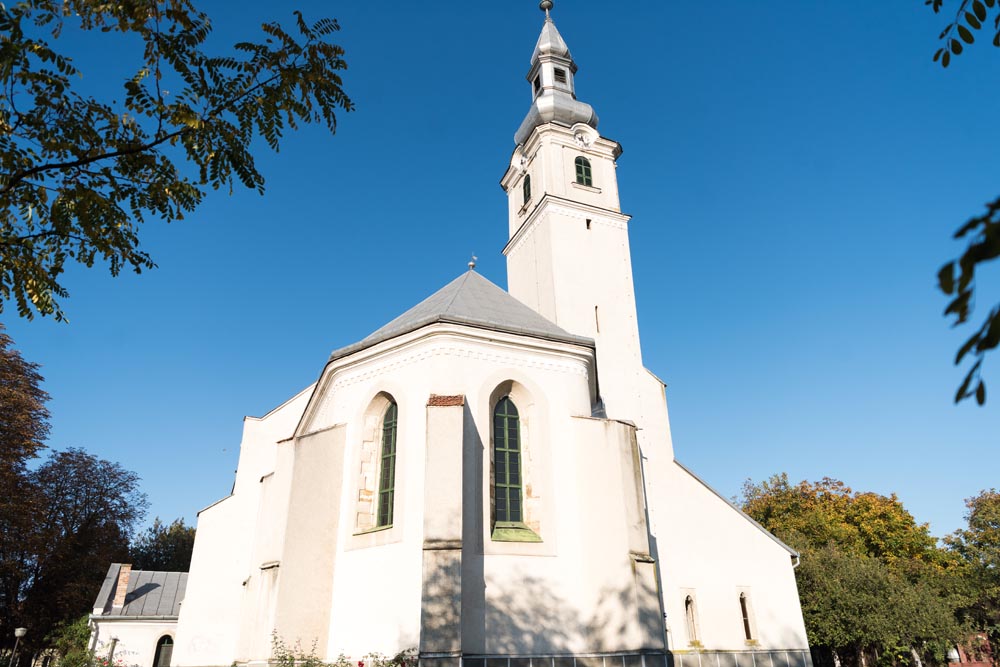
The reformed church from Sălard
The murals, discovered on the northern wall during recent renovations, are perhaps the most remarkable ones. The Vrigin Mary and Baby Jesus are represented on one of them, surrounded by St. King Stephen, St. Emeric, respectively St. Catherine, with Emperor Maxentius standing at her feet.
The Komáromi mansion

The exhibition area presents aspects from the life of the first owners, historical details about the past of the local reformed church, and historical dates of the region. All of this is an interesting display related to the dramatic effects that the intervention of men had on the moorlands...